
Sandra Wärenhed | 2026-08-26
When companies talk about sustainability, they usually focus on energy efficiency, emissions reduction, or supply-chain overhauls. These are important initiatives, but they overlook a significant opportunity area when it comes to sustainability: behind-the-scenes waste-management processes.
Inefficient waste handling quietly drives up costs, undercuts recycling performance, and creates safety hazards, while also increasing carbon footprint. What many companies don’t realize is that there are a few simple operational adjustments they can make to improve all four categories, as well as overall business performance.
Sustainability Begins with Daily Operations
Sustainability isn’t only about large corporate initiatives or capital projects. It’s also built through consistent day-to-day practices that add up to real impact over time. Waste management tends to get overlooked because it happens behind the scenes and its metrics are not as immediately tangible as things like carbon emissions or energy use.
But make no mistake: How a facility handles its waste is directly tied to its environmental goals, from hauling frequency to recycling volumes, and contamination rates. They all show up in ESG reporting and corporate sustainability metrics.
The takeaway is simple: small, consistent improvements to internal processes can produce outsized environmental and financial results over time. They can reduce trash, lower hauling fees, and limit greenhouse gas emissions from decay and repeat carting trips.
Common Waste Management Challenges
Before implementing better systems, most facilities run into a familiar set of problems. Recycling gets contaminated when materials are mixed together. Cardboard and plastic waste piles up faster than it can be processed. Dumpsters get picked up more often than necessary, driving up hauling costs. Employees spend valuable time manually breaking down boxes. Loose recyclable materials overwhelm limited storage space. And without standardized procedures, recycling practices vary from one department to the next.
Individually, these issues might seem minor. But collectively, they add up to increased hauling costs, reduced recycling efficiency, and unnecessary labor expenses, all while making it harder to hit sustainability targets.
Five Small Changes That Make a Big Difference
- Separate materials at the source. Keeping cardboard, plastic film, and general waste separate from the start reduces contamination and improves the value of recyclable material.
- Standardize collection procedures. Consistent, clearly labeled collection points make it easier for employees to recycle correctly, reducing errors across shifts and departments.
- Compact recyclables earlier. Companies that compact materials as soon as they’re generated, rather than letting them accumulate throughout the day, free up floor space, increase safety, and keep their facility better organized.
- Train employees. Ongoing education on proper recycling procedures reduces contamination and builds consistency across teams.
- Measure waste performance. Tracking recycling volumes, hauling frequency, and waste costs over time turns waste management from a guessing game into a data-driven process that highlights exactly where the next improvement should happen.
Technology Supports Sustainability
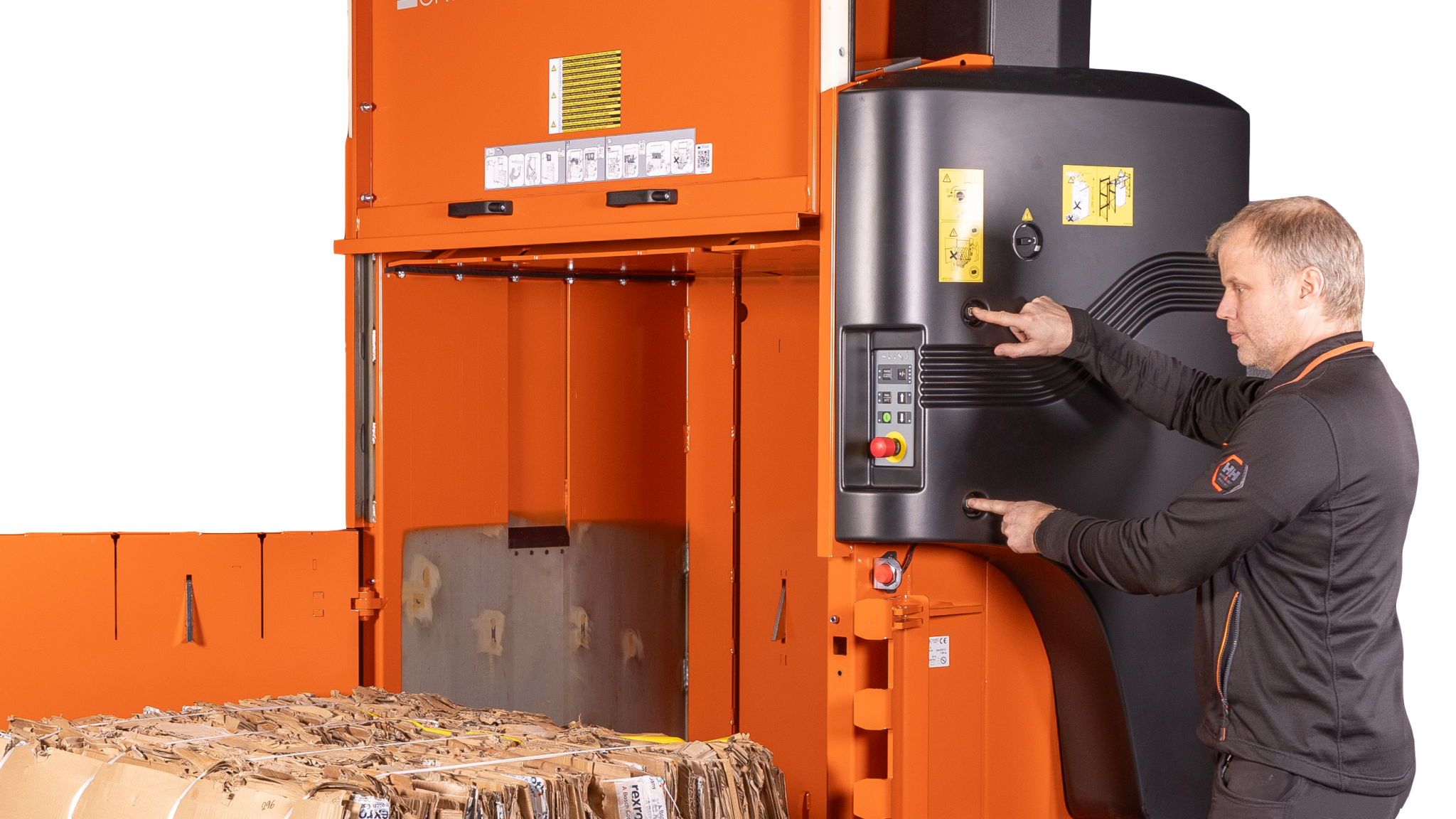
Once the right processes are in place, equipment can help sustain and scale those gains. Balers and compactors reduce how often haulers need to be called, improve consistency in how recyclables are processed, and increase the market value of baled material (the cleaner and drier, the more valuable).
They also improve workplace safety by freeing up cluttered warehouse or back-of-the-house space, reduce manual handling, and cut the labor hours spent managing it all.
It’s worth noting that equipment is one piece of a broader waste management strategy, not a replacement for good processes, training, or measurement. The best results come when equipment enhances habits that are already working.
The Business Benefits Beyond Sustainability
The advantages of a better waste-management system extend well past environmental metrics. Facilities typically see lower operating costs, reduced transportation expenses, and better-organized warehouse space. Employees spend more time on primary responsibilities and less on manual waste handling; work environments become cleaner and safer, and sustainability reporting gets easier to support with real data.
In most cases, environmental responsibility and operational efficiency move in the same direction, with one reinforcing the other.
Conclusion
Meaningful sustainability improvements don’t always require major capital projects or sweeping organizational change. It’s possible to generate notable positive impacts by simply optimizing the everyday processes happening behind the scenes.
Adopting more efficient waste-handling equipment can reduce contamination, improve material separation, and standardize recycling practices. As a result, organizations can lower costs, improve workplace safety, and strengthen their sustainability performance, all in one fell swoop.
For facilities ready to take the next step, the right strategy and equipment can turn the back room into a more efficient, organized, and sustainable part of the operation.
Ready to improve your sustainability efforts while reducing waste handling costs? Contact Orwak North America to learn how our waste compaction and recycling solutions can help your facility improve operational efficiency, maximize recycling performance, and achieve long-term sustainability goals.